
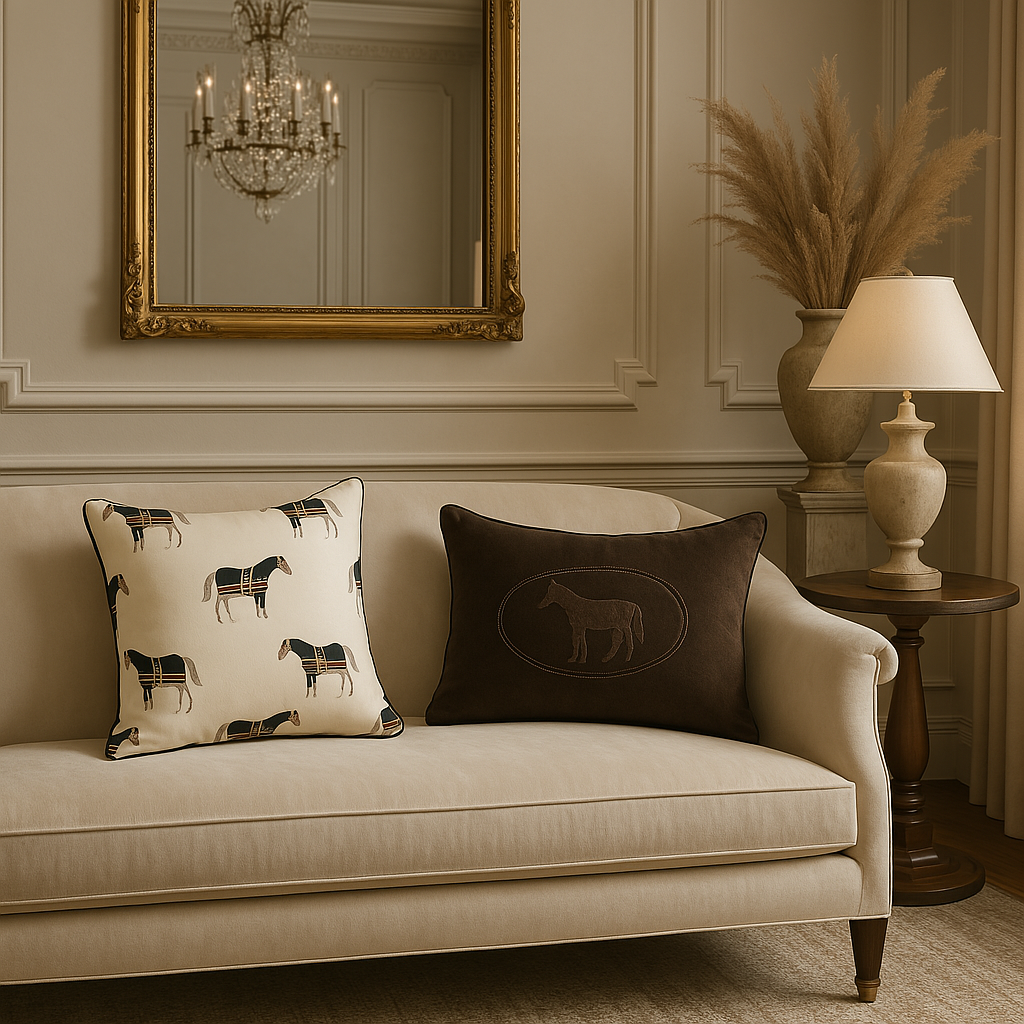
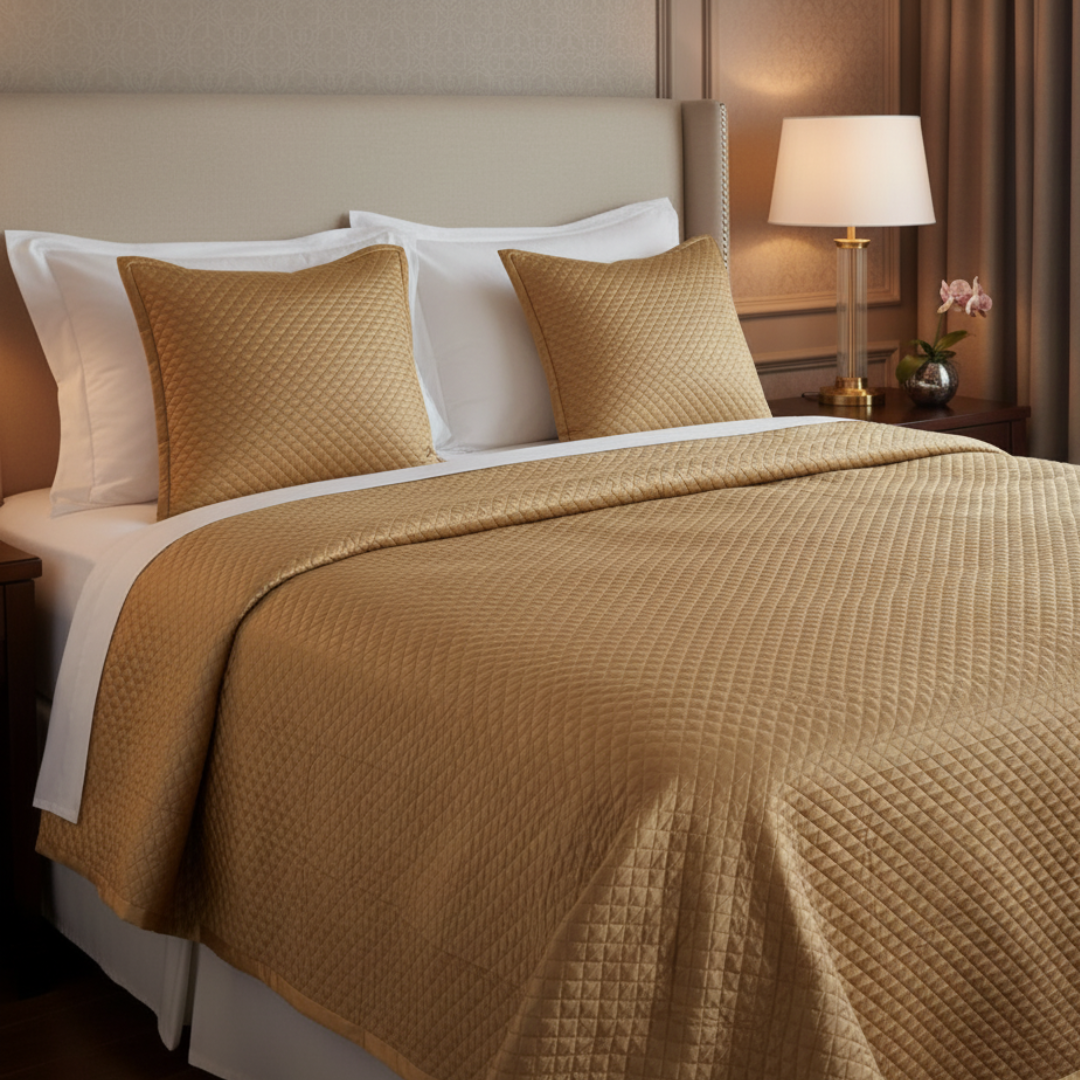




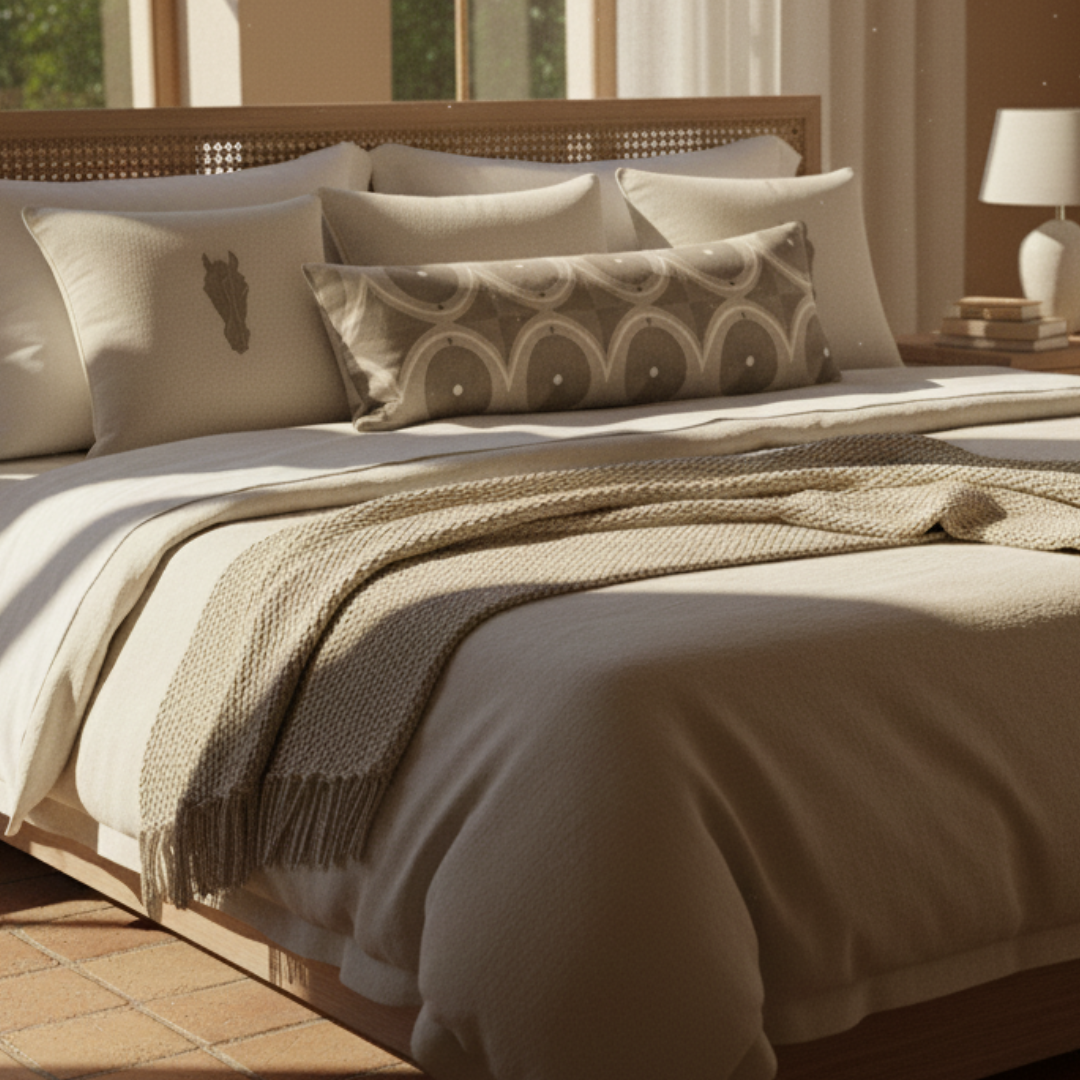


There is a particular quality of light in a well-dressed bedroom at the end of the afternoon. The sun has moved past its harshest angle. The room settles into itself. And it is in that hour, more than any other, that you understand whether a bed has been truly considered or merely made. The difference is almost always in the surface. Not the thread count alone, not the pillows, but the coverlet, that single layer that carries the entire visual weight of the room.
The search for a velvet coverlet king size tends to begin with a vague feeling: the bed looks flat, or too plain, or somehow incomplete despite everything else being right. What the bedroom is missing is not more. It is texture with intention. Weight without bulk. Pattern that rewards a second glance without demanding a first.
Why the Coverlet Is the Most Underestimated Layer
A duvet set can fill a bed. A coverlet defines it. The distinction matters because a coverlet sits on top of the bed as a visual statement rather than a sleeping necessity. It is the layer that gets folded back with care, that catches the last of the evening light, that a guest notices the moment they step into the room. A king-sized bed, in particular, requires this layer to be precise, too light a fabric and it disappears into the mattress, too heavy and it overwhelms the space entirely.
The right cotton king size coverlet carries a quiet authority. It brings structure to a bed without stiffness. It introduces pattern at a scale that reads beautifully across a large frame. And in the Indian home, where bedrooms often live in warm ambient light rather than the cool northern daylight of European interiors, a coverlet with a subtle sheen behaves entirely differently than one photographed in a studio. It gives back light rather than absorbing it.
Texture Over Pattern: The Caneweave Principle
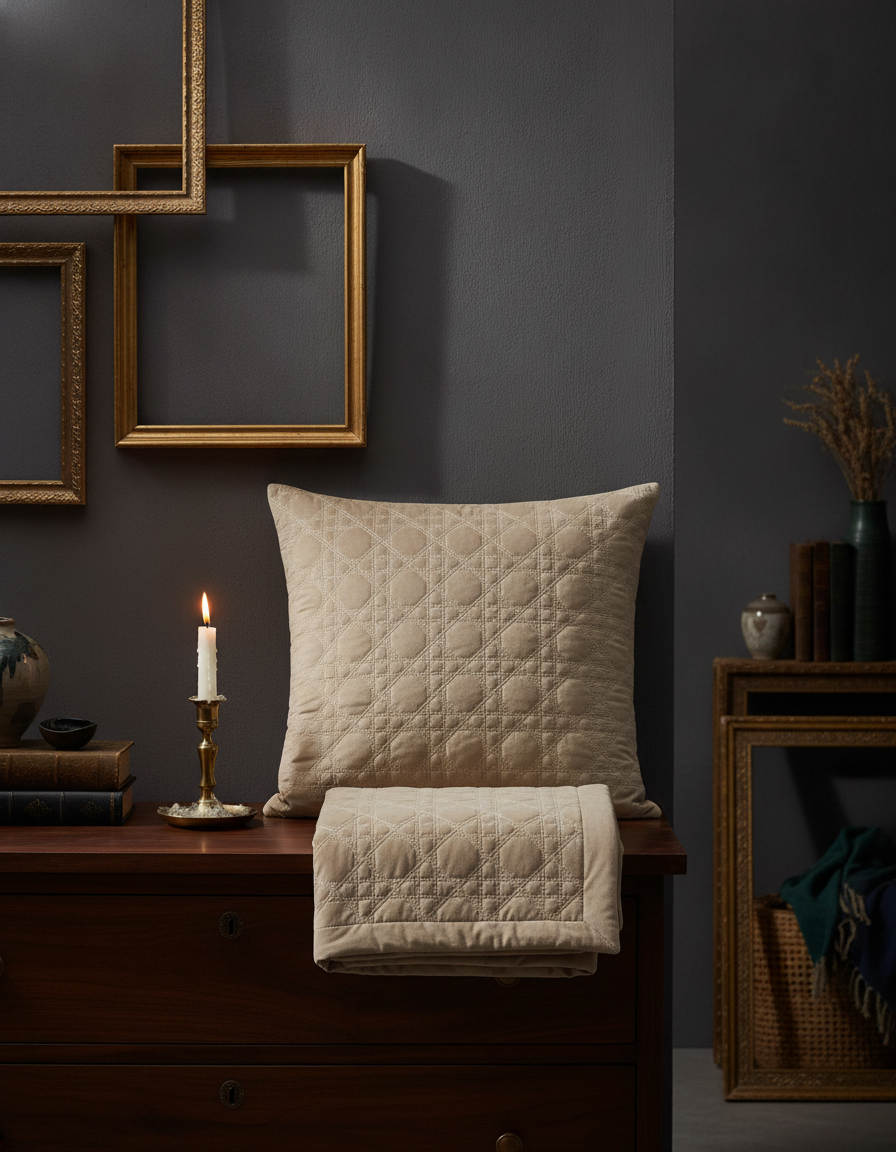
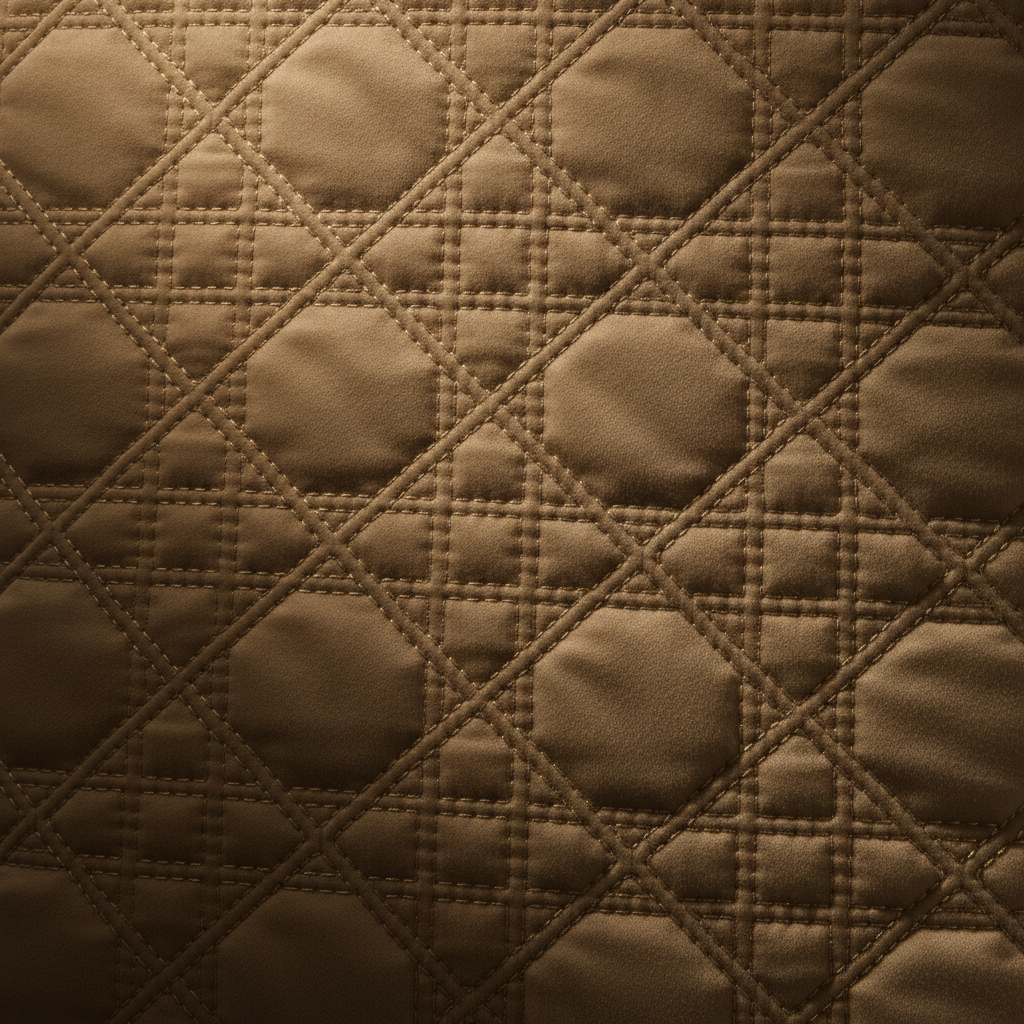
There is a long and considered tradition in textile design of using weave structure as decoration, of allowing the cloth itself to carry the visual work rather than relying on print or applied embellishment. The caneweave pattern belongs to this tradition. It draws from the language of rattan and wicker, surfaces that have furnished the grandest Indian verandas and the most quietly elegant European drawing rooms in equal measure. Translated into sateen with fine lurex running through the weave, the pattern becomes something that shifts. In morning light it reads as structure. At night, by the warmth of a bedside lamp, it becomes something closer to a glow.
This is the intelligence of a well-designed cotton coverlet for a king size bed: it does not ask to be noticed. It rewards the person who pauses to look closely. And it changes the room across the hours of the day without changing itself at all.
Styling a King Bed with a Neutral Coverlet
A beige or warm taupe coverlet is, counterintuitively, more demanding to style than a bold one. A deep jewel tone forgives a certain carelessness, the colour carries the composition. A neutral requires that every element around it is considered. The benefit, when it is done well, is a bedroom that feels like it was designed rather than assembled.
Begin with the sheets beneath. Crisp white cotton against a beige sateen coverlet creates the kind of layering seen in the finest hotel suites, the contrast is not stark but it is present, and it gives the bed an architecture. If the room skews warmer, towards terracotta walls or teak furniture, consider ivory or oatmeal sheets instead. The effect is richer, more enveloping.
Cushions should be chosen for texture rather than colour. A warm taupe or beige coverlet absorbs tone. What lifts it is dimensional surface, velvet, embroidery, thick linen with a visible weave. Layer two or three cushions at the centre of the bed in varying heights, keeping the palette tonal and the textures divergent. The result is depth without noise.
The Question of Scale on a King Bed
King size cotton coverlet sets present a specific challenge that a queen coverlet does not: the scale of the pattern and the weight of the fabric must be proportionate to the bed's footprint. A pattern that reads beautifully in photography can dissolve into visual flatness when spread across a king-sized frame. Look for a weave or quilting structure that has enough repeat to read clearly at distance, standing at the doorway of the room, the pattern should still register as intentional geometry rather than subtle texture.
A white cotton coverlet in a king size works by contrast rather than by pattern, it asks the architecture of the room to do the heavy lifting. A white or near-white sateen with lurex threading is a more forgiving choice, carrying the same freshness but adding a quality that reads as warmth under artificial light. For Indian bedrooms, which often live under warmer-toned pendant fixtures or recessed lighting set to a low colour temperature, this distinction is not small.
The Fold and the Finish
How a coverlet is placed on a bed is as important as the coverlet itself. The most elegant approach is to allow it to fall to the floor or to within an inch of it on three sides, then fold the top edge back by a third to reveal the sheets beneath. This fold creates a horizontal line across the bed that acts as a visual anchor, it gives the eye somewhere to rest and makes the layering beneath it feel intentional rather than accidental.
The knife-edge finish, a clean, flat seam at the perimeter with no piping and no decorative border, is the most refined choice for this kind of coverlet. It keeps the eye on the surface rather than the edge. The Beige Lurex Caneweave Bedspread from The Pillow Company is built to exactly this principle: the border is present but silent, and the surface does all the speaking.
A Room That Already Knows Itself
The homes that feel genuinely beautiful rather than expensively furnished tend to share one quality: every element in them was chosen with an understanding of how it would live in the space, not just how it would look in isolation. A coverlet is not a duvet. It is not a throw. It occupies its own category, a surface decision as much as a comfort decision, and one that operates at the scale of the entire room.
For a king-sized bed in a room with high ceilings, warm walls, and the particular quality of late afternoon light that filters through Indian homes in every season, the choice of a sateen weave in neutral beige with a caneweave pattern and lurex threading is not a decorating decision. It is a position. It says something about how the bedroom is understood, as a space that deserves the same considered attention as the rooms where guests are received.
If the bed has felt slightly unresolved, the answer is rarely more. It is almost always better. Explore bedspreads from The Pillow Company, including the Beige Lurex Caneweave Bedspread, and find the layer the room has been waiting for.
A room that holds its breath is a room where every choice was made deliberately. Begin with the bed.