


Cushion Size Guide
Scale is the quietest mistake in a room. The right cushion in the wrong size reads as an afterthought; the right size, chosen for the seat or the bed it sits on, looks considered before anything else is. This is a short guide to getting it right, the sizes our cushion covers come in, what each one is for, and how many a sofa or bed actually wants.
Square cushion cover sizes
| Size | Reads as | Best for |
|---|---|---|
| 40 × 40 cm | The small square | Accent chairs, layering, smaller seats |
| 45 × 45 cm | The everyday square | The workhorse, sofas, chairs and beds |
| 50 × 50 cm | The fuller square | Deep sofas, the front of a layered bed |
| 55 × 55 cm | The anchor square | Large and deep sofas, the back layer of an arrangement |
| 66 × 66 cm | The Euro square | The back of a layered bed, floor seating |
Lumbar and rectangular sizes
| Size | Reads as | Best for |
|---|---|---|
| 23 × 30 cm | The small rectangle | A quiet accent, smaller chairs |
| 30 × 45 cm | The compact lumbar | Armchairs, a child’s room |
| 35 × 60 cm | The classic lumbar | Lower-back support, breaking a row of squares |
| 35 × 90 cm | The long lumbar | A bolster across a bed, a long bench or sofa |
What size cushions for a sofa
As a rule, fewer and larger looks more composed than many small covers, and odd numbers sit better than even.
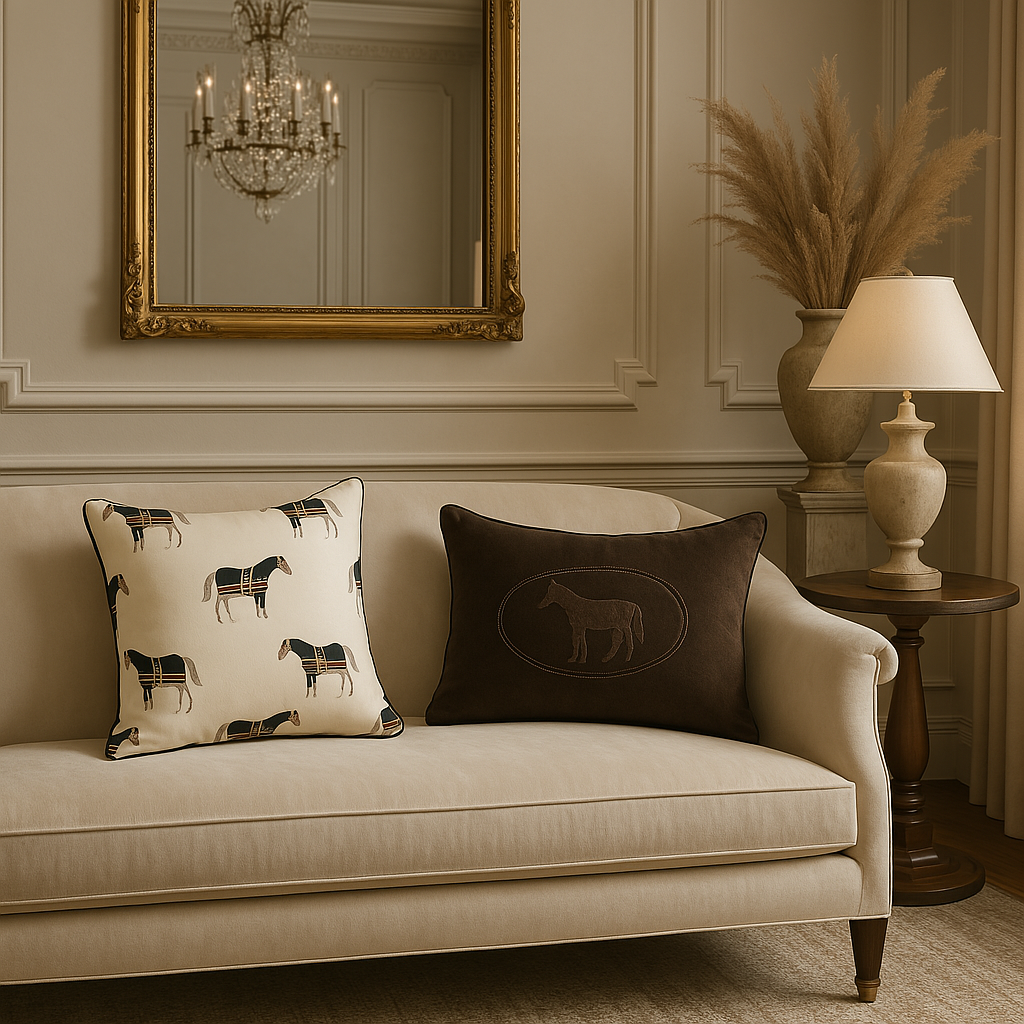
- Two-seater, three covers: a pair of 55 cm squares at the corners with a 35 × 60 cm lumbar between them.
- Three-seater, five: two 55 cm squares at the corners, two 45 or 50 cm layered in front, and a lumbar to break the line.
- Sectional or large sofa, work in groups, mixing 55 and 66 cm anchors with 45–50 cm squares and a lumbar or two.
Mix across two or three cloths rather than matching everything, velvet against linen, a solid against a print, so the arrangement reads composed rather than arranged.
Dressing a bed
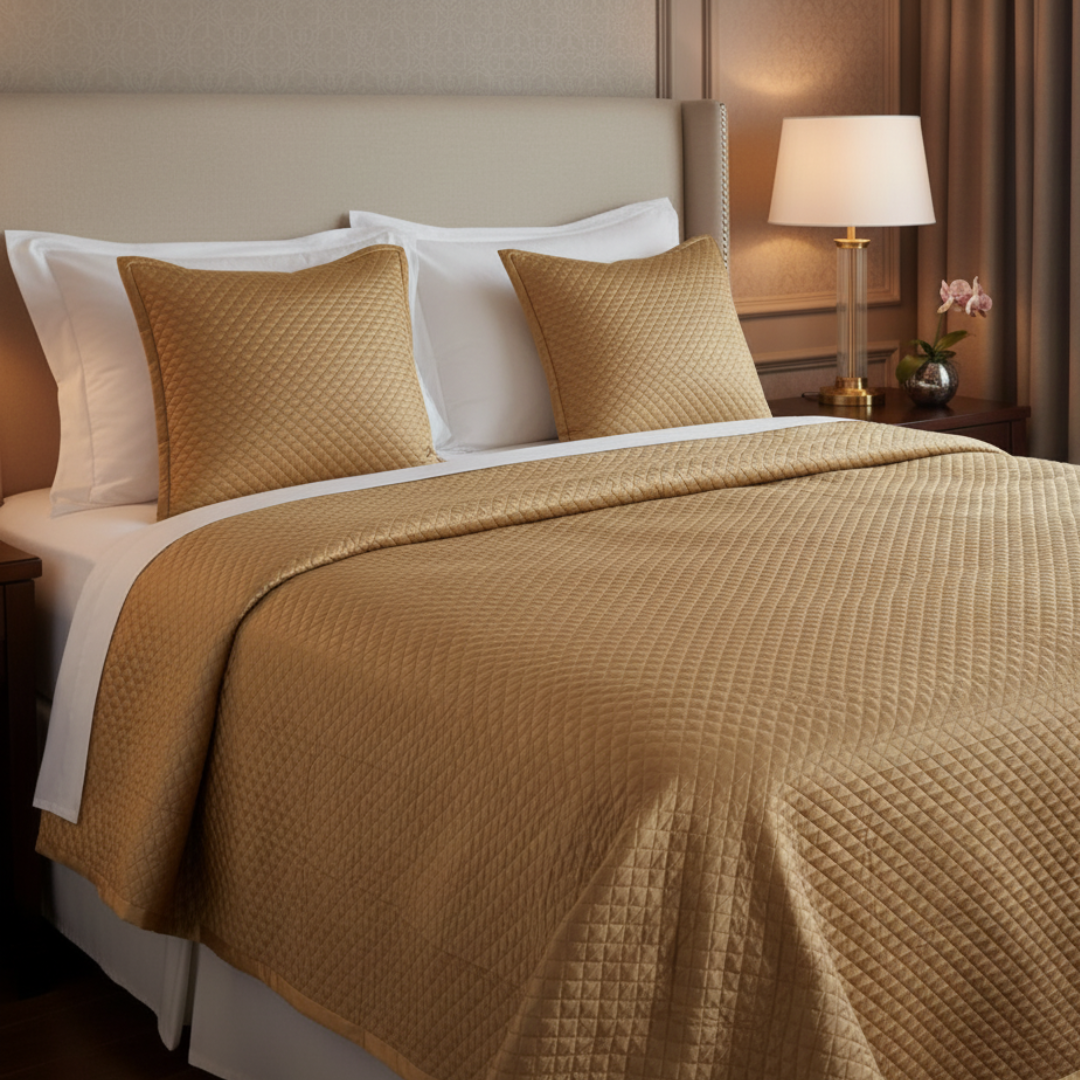
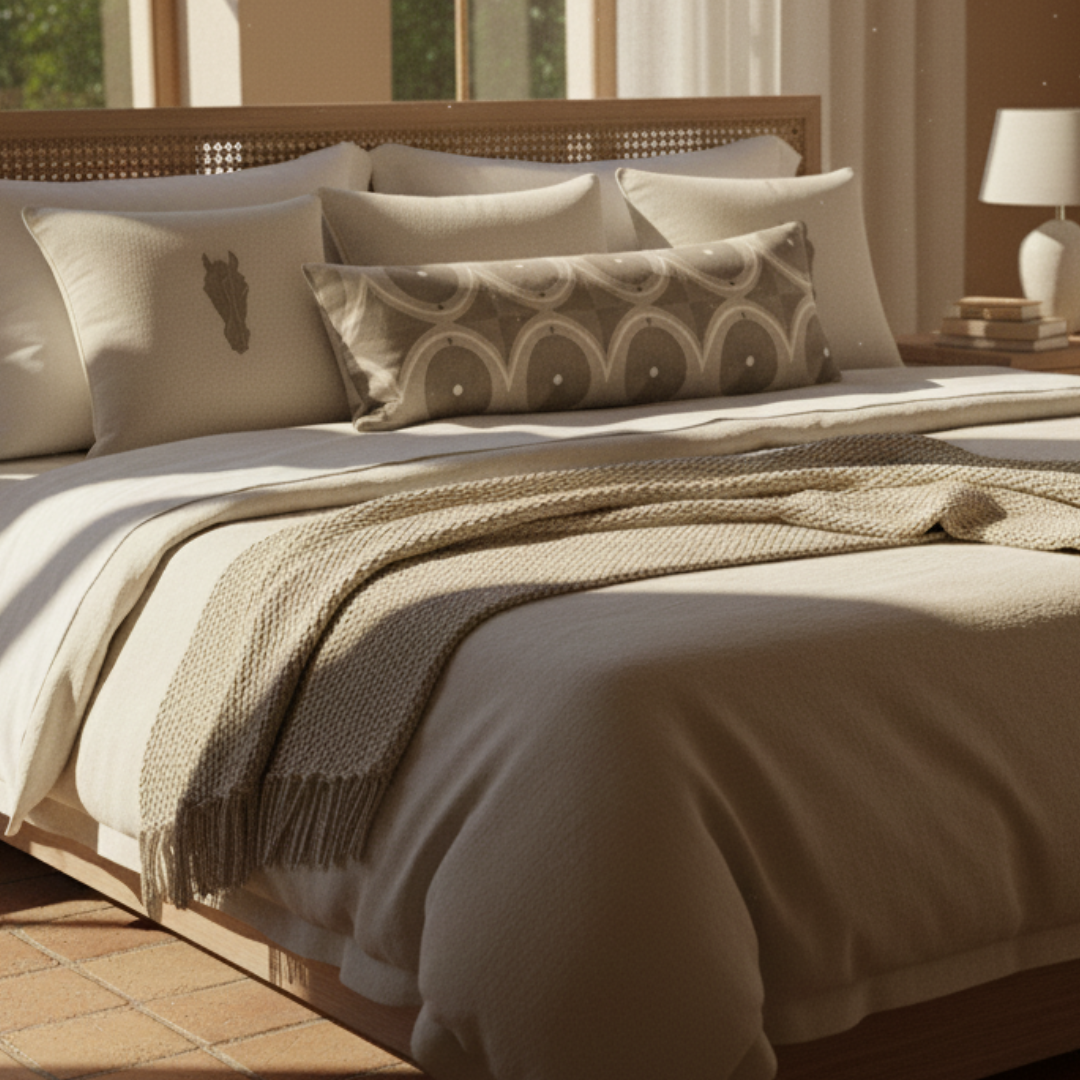
Layer from the back forward: 66 cm Euro squares stand against the headboard, 55 or 50 cm squares sit in front of them, and a 35 × 60 cm lumbar lies low across the centre. On a king, a 35 × 90 cm bolster reads beautifully along the foot of the bed. An odd run looks cleaner than a symmetrical one.
What a lumbar cushion is
A lumbar is the long, low rectangle, wider than it is tall. The classic 35 × 60 cm does the work a square cannot: supporting the lower back on a deep seat, and breaking the rhythm of a row of squares so an arrangement doesn’t read as a matching set. The longer 35 × 90 cm works as a bolster across a bed or bench.
Inserts and fill
Covers and inserts are specified separately, and every cover has a matching insert in the same size, a 45 cm insert for a 45 cm cover. Pair each cover with its matching size for a clean, well-filled finish.
In short
Start with 55 cm for the anchors and 45–50 cm to layer; add a 35 × 60 cm lumbar to break the line; a 66 cm Euro square and a 35 × 90 cm bolster dress a bed. Keep to odd numbers and mix the cloths. When you’re ready, shop the full range of cushion covers, in velvet and linen, or choose your cushion inserts to match.