





There is a particular quality of light in a well-dressed bedroom at dusk, not quite day, not yet night, the room holding itself in a kind of suspension. Candles unlit. Linen turned down. The surfaces still. This is the moment every considered bedroom is dressed for, whether its owner is conscious of it or not. Most bedroom decor inspiration begins with the wrong question. It asks: what should I add? The better question is always: what does this room want to feel like at that hour?
The answer, almost always, is warmth without heaviness. Texture without noise. A room that seems to have arranged itself.
Begin with the Bed as Architecture
The bed is not furniture. It is the room's defining statement, the way a fireplace is the statement of a drawing room. Every other element in the space, the side tables, the lighting, the rugs, the drapes, exists in relationship to it. Before you consider colour or accessory, consider the bed's visual weight and how it sits within the room's proportions.
A bed that is dressed with a single, beautifully textured layer commands more presence than one stacked with mismatched cushions and throws. In bedroom decoration design, restraint is a choice that requires more confidence than abundance. Pare back. Let the surface breathe. Then introduce texture at the one moment it will be felt most, the bedspread.
The Case for a Neutral Palette, Done Properly
Neutral does not mean absent. The most arresting bedrooms in the world, those rooms you see in the pages of a design quarterly and quietly save to return to, are almost never loud. They are precise. A fawn against ecru. A warm white against aged oak. A stone linen against tarnished brass.
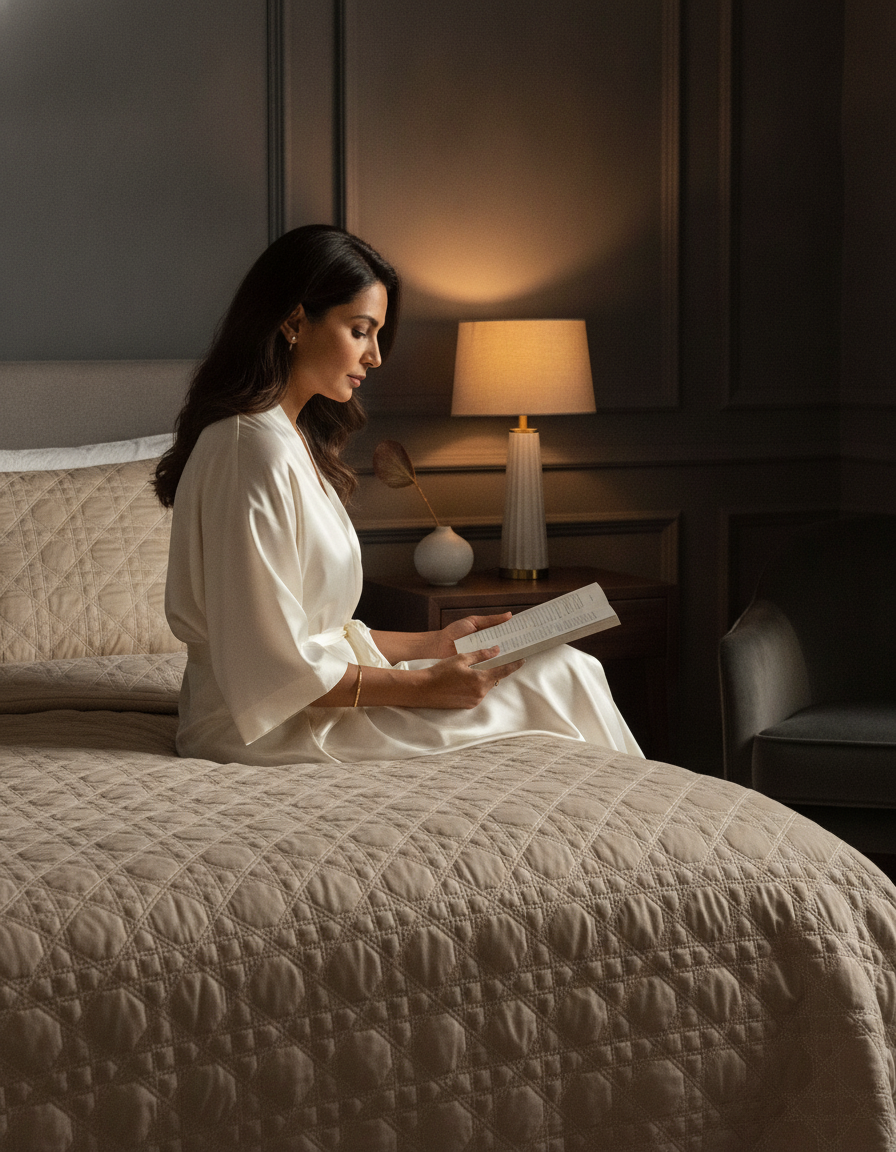
The mistake most people make with a neutral palette is treating it as a single flat tone. What makes it work is variation within the family: a deeper sand against a pale cream, a matte finish against something that catches the light. This is where weave and material become more important than colour. A room in beige is forgettable. A room in beige with a quilted geometric surface that shifts from matte to luminous as the light moves across it is something else entirely.
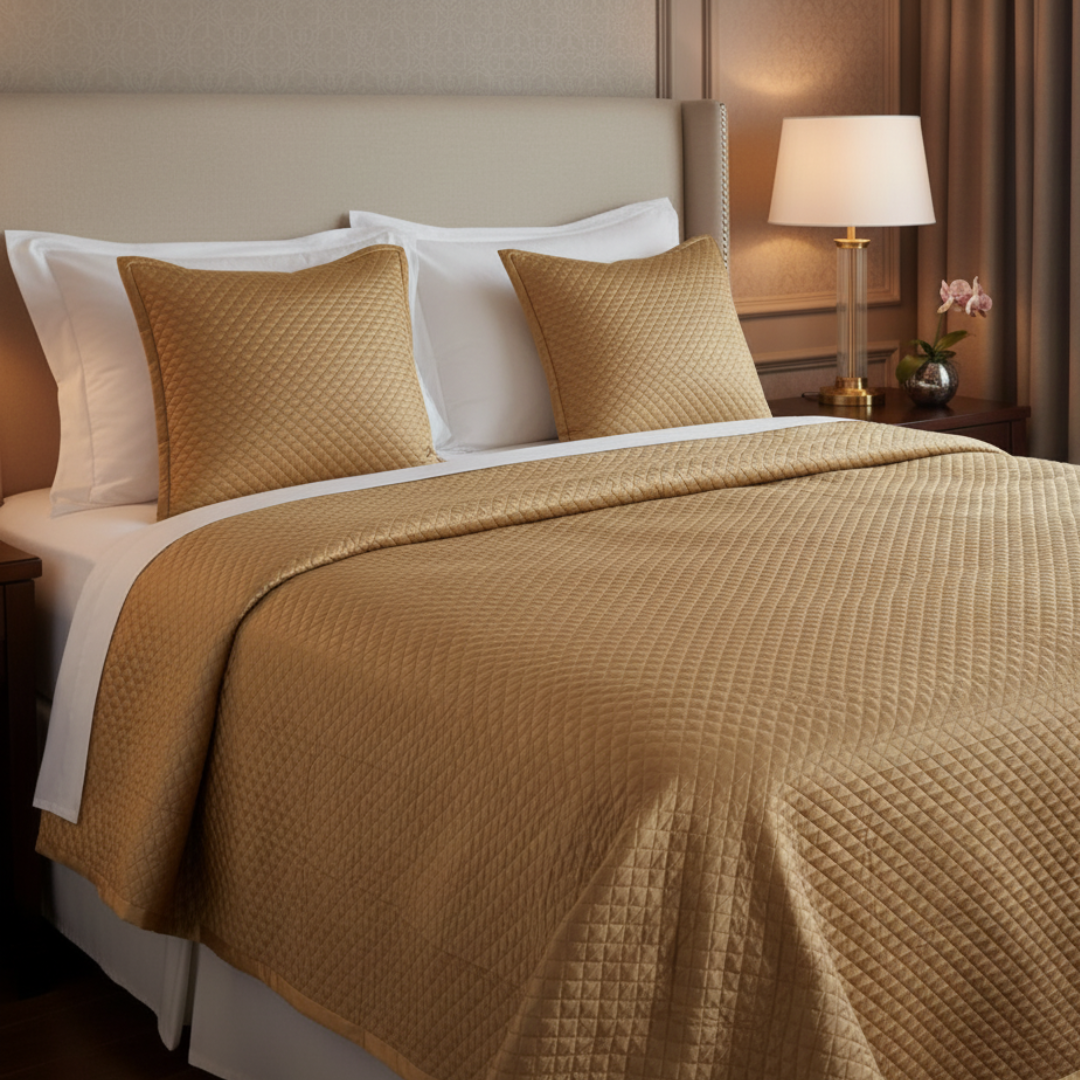
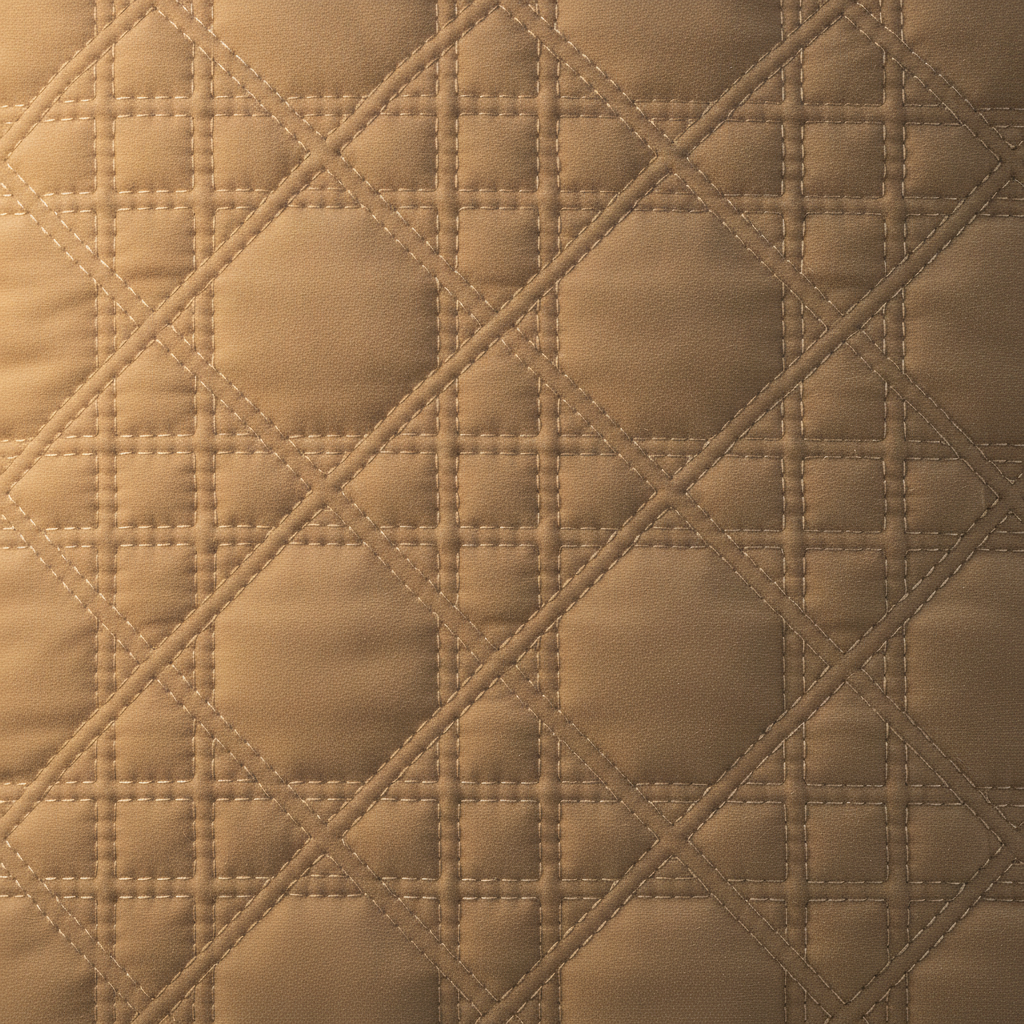
The Beige Lurex Caneweave Bedspread operates exactly in this register. The cane-weave quilting pressed into soft sateen, lifted by the thinnest thread of lurex, creates a surface that reads as calm from a distance and as intricate up close. It does not announce itself. It rewards attention.
Light Is a Material
In Indian homes, natural light changes character more dramatically across a day than in almost any other climate. The hard white of a Delhi afternoon, the diffused gold of a Mumbai evening, the deep amber of a Jaipur dusk, each hour transforms a room's palette entirely. Bedroom decor that does not account for light at multiple hours of the day is only half-considered.
A surface with subtle sheen, sateen, fine lurex, polished cotton, catches evening light in a way that matte surfaces never can. This is why the great hotel bedrooms of the world are always dressed in materials with a degree of lustre. Not gloss. Lustre. There is a distinction. Gloss reflects. Lustre absorbs and gives back softly, the way candlelight behaves on a pearl.
When selecting bedroom decor ideas, always assess a fabric or surface at the hour you will most inhabit the room. What is beautiful at noon may be flat by lamplight. What appears almost too plain in daylight may become the most beautiful thing in the room by evening.
Layering Without Clutter
The rooms that feel genuinely considered are those where every layer earns its place. This applies as much to a guest bedroom as to a master suite. Guest bedroom decor ideas often err towards over-dressing, an attempt to signal hospitality through abundance. The better gesture is a room so calmly complete that the guest feels no obligation to interact with it at all. It simply receives them.
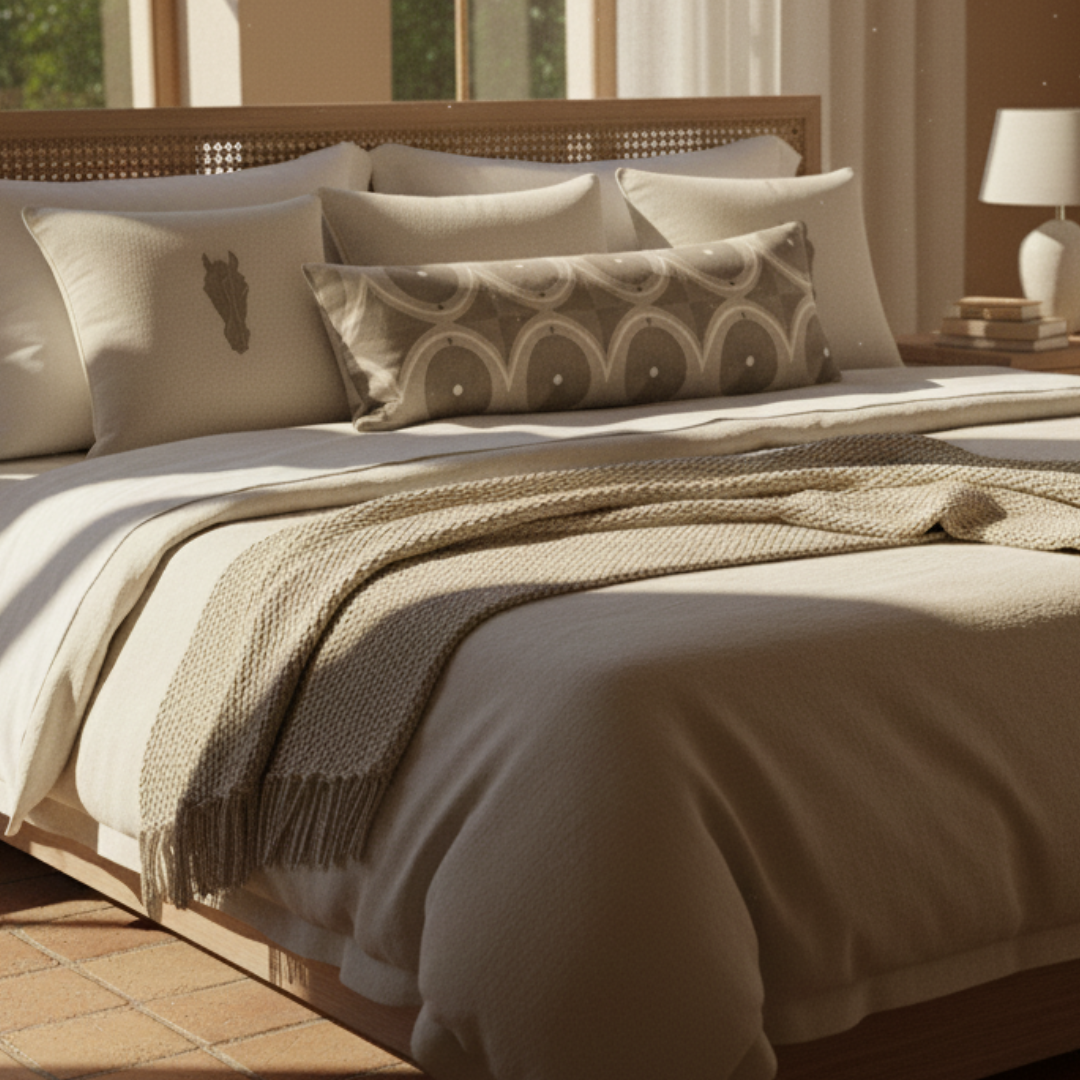
Layer from the bed outward. The bedspread first, as the largest surface. Then two or three cushions that introduce a second texture without competing. A throw folded across the foot of the bed, not casually but with intention, as a tailor folds cloth. A single flower in a narrow-necked vessel on the side table. Nothing more is needed. The discipline is in knowing when to stop.
For modern bedroom decor ideas that feel current rather than trend-led, consider this: the most enduring rooms are those built around one considered surface and edited from there. The geometric lattice of a cane-weave pattern, for instance, introduces visual structure without pattern in the traditional sense, it is architectural, not decorative, and it works across every palette from crisp white to deep charcoal.
The Couple's Bedroom: Two Sensibilities, One Room
Bedroom decor ideas for couples almost always require a negotiation between two aesthetic sensibilities, and the rooms that manage it well are those built on a shared neutral ground, quite literally. A foundation of warm neutral tones, layered with textures that read as neither masculine nor feminine but simply refined, allows both personalities to coexist without compromise.
A fawn and ecru quilted surface reads as warmly understated to one person and architecturally precise to another. It is the kind of piece that works because it does not make a demand. It simply holds the room together, and both people in it feel at home.
The Room as a Complete Thought
A beautifully dressed bedroom is not assembled, it is composed. Like a sentence that does not need another word, it arrives at a point of stillness. The right bedspread, the correct lamp, a rug that grounds rather than decorates, curtains that pool just slightly on the floor. Each decision supports the others. None of them shout.
If you are looking for a starting point for your own bedroom decor inspiration, begin with the surface you spend the most time looking at. For most people, that is the bed. Dress it with something that rewards the eye without exhausting it, a texture that shifts with the light, a tone that holds across seasons, a pattern so considered it barely reads as pattern at all.
The Pillow Company makes pieces for rooms like this, rooms that do not need to explain themselves. You will find the full edit, and the thinking behind it, at The Pillow Company Journal.
The room you are imagining already exists. You are simply deciding how closely the one you live in will resemble it.